
Build emotional vocabulary
Help people move beyond “good” or “bad” and find more precise words for their experience.
When “I’m fine” doesn’t quite say it, there can be more to explore. EmotionOS is developing stories, check-ins and reflection tools to make everyday emotional learning more approachable.
In development · Beta enquiries welcome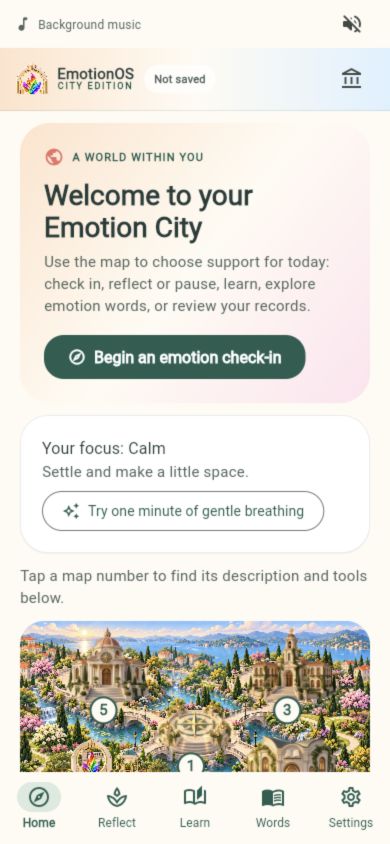
EmotionOS began with a belief: understanding our emotions should be something we can learn and practise.
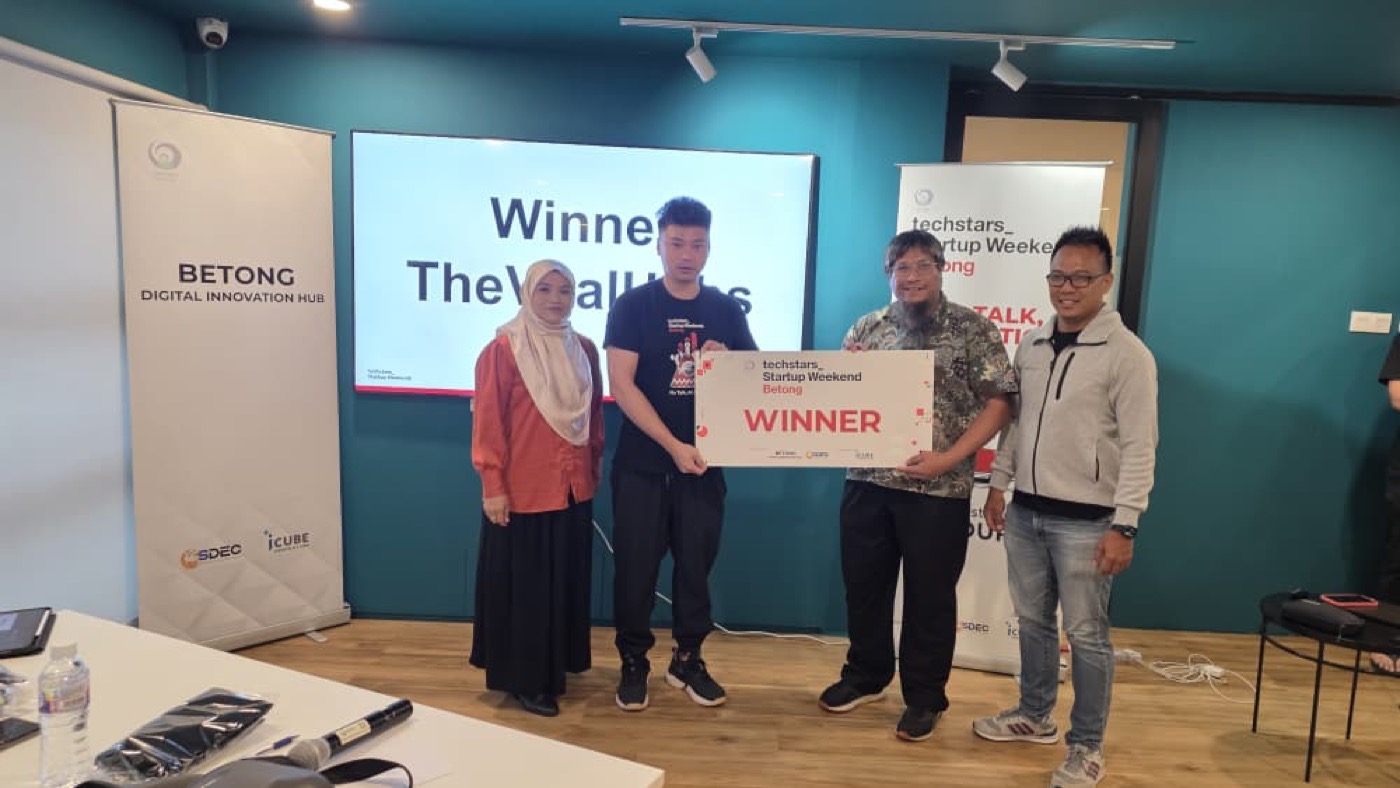
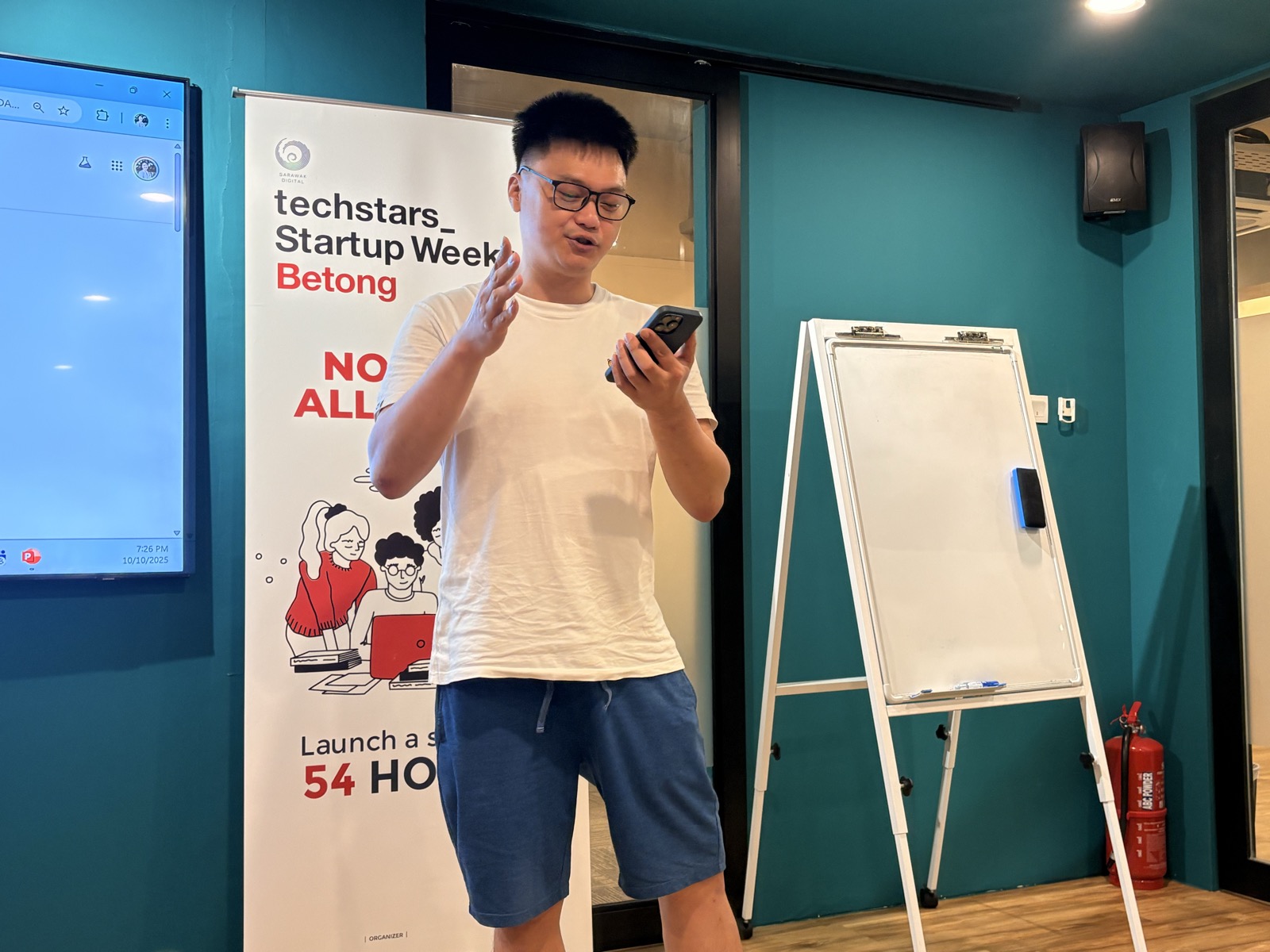
At Techstars Startup Weekend Betong, Deniss Chiu and The Vital Hubs brought forward an idea focused on emotional literacy. The original presentation opened with a question that anyone could recognise: “Can you name what you feel?”
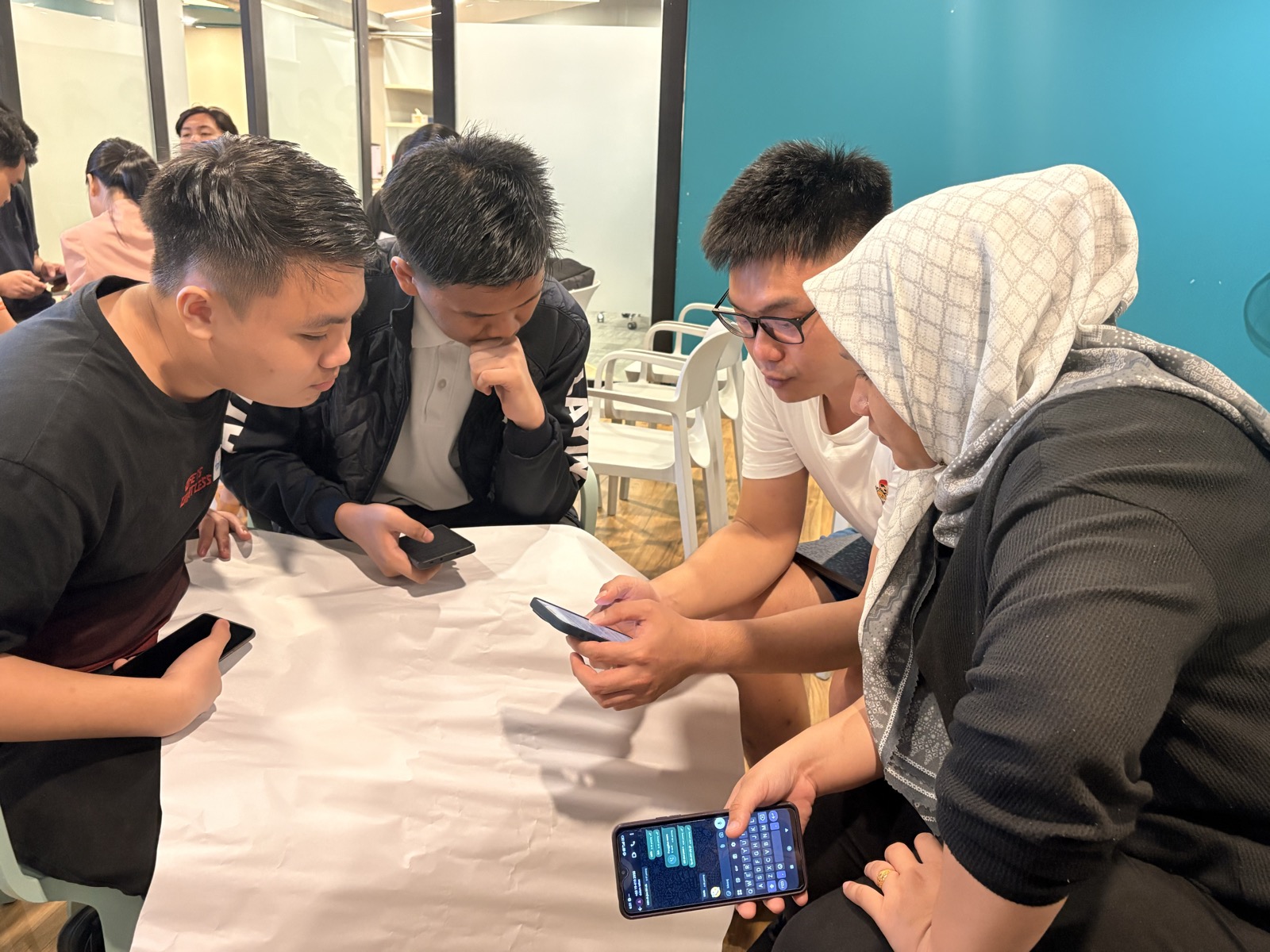
The weekend created a space to work through the concept, shape an early prototype and present the idea. The Vital Hubs went on to win the competition in 2025—a milestone in the beginning of EmotionOS.
The pitch described a simple loop: track your emotions, learn about them, and practise emotional-management skills. Its aim was to help people build emotional awareness and healthier connections.
That starting point continues to guide development today. EmotionOS is evolving into an app that connects stories, emotional vocabulary, personal reflection and practical exercises.

02 / Why we’re creating it
A difficult conversation. A small disappointment. A moment of joy you want to hold onto. EmotionOS is being created to make emotional learning part of moments like these.
Help people move beyond “good” or “bad” and find more precise words for their experience.
Use familiar situations and guided stories to explore feelings, thoughts, body cues and responses.
Offer small opportunities to pause, reflect, communicate and choose a supportive next step.
The original competition deck reported insights from 150 local respondents in Sarawak: limited emotional literacy alongside interest in tools for learning. This early project research helped shape the idea; it was not a clinical study or an evaluation of app outcomes.
The first pitch made emotional literacy easy to remember. Today, the emphasis is on noticing an experience, understanding its context and choosing how to respond.
Notice what is present and explore language for your emotions.
Look at the situation, thoughts, body sensations and possible needs around a feeling.
Practise a response that fits the moment. The aim is not to force every feeling into a positive one.
The current learning framework develops four connected skills: Understand · Identify · Acknowledge · Regulate.
Recent screens from the app’s October 2026 development builds. These are previews of work in progress; features and availability may change.
An illustrated Emotion City brings the learning and reflection spaces together.
Enlarge screen ↗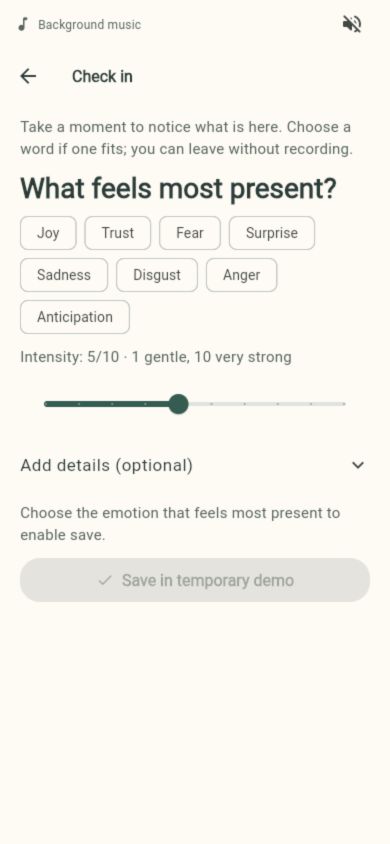
A check-in invites you to choose a feeling and notice its intensity.
Enlarge screen ↗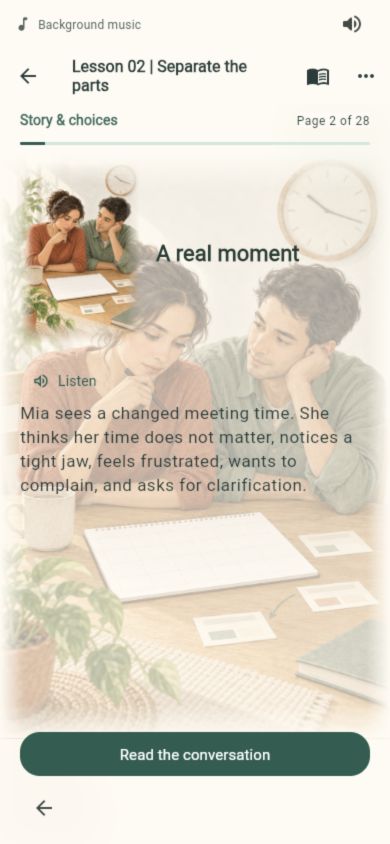
EmotionOS Academy explores familiar situations through stories, choices and reflection.
Enlarge screen ↗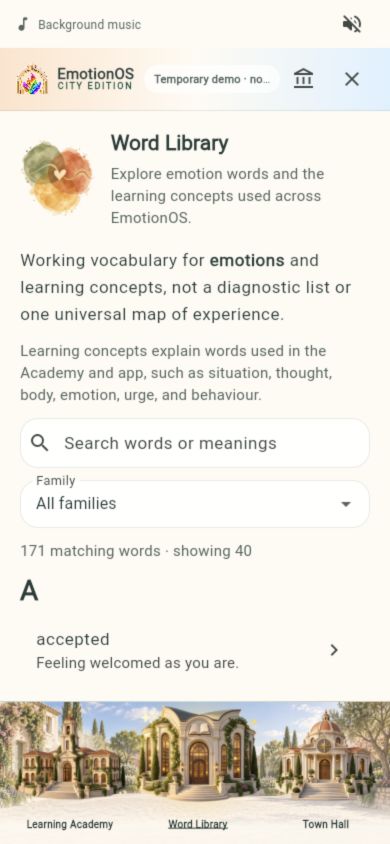
The Word Library helps you explore emotional vocabulary and related ideas.
Enlarge screen ↗Screens are illustrative development captures with sample content. They are images, not a live app or a sign-in form.
Our Larch competition entry
Larch Creator Challenge · Season 3Alongside EmotionOS, Deniss is exploring interactive storytelling through TideBreak, an entry in the Larch Creator Challenge.
A city is threatened by a storm. Who do you help, and what do you choose when the way forward is uncertain? Explore TideBreak’s challenges and choices around rescue, responsibility and escape.
Play TideBreak on LarchPlay the published game on larch.ink · Traditional Chinese
Opens in a new tab.

EmotionOS continues to develop under The Vital Hubs, led by creator Deniss Chiu, with Sophia Chiu as part of the development team.
Meet the people behind EmotionOS ↗The idea was shaped and presented at Techstars Startup Weekend Betong, where The Vital Hubs won the competition.
Ongoing development brings together an Academy, emotional check-ins, journaling, an emotion dictionary and guided practices.
The focus remains on clear learning experiences, accessible presentation and thoughtful everyday use. Public release details will be shared when confirmed.
You don’t need to be an expert in emotions to have something valuable to share. If you’d like to try EmotionOS, email us about beta access. Tell us what makes sense, what doesn’t and what you would find useful in everyday life.
EmotionOS is an educational wellbeing project. It is not a diagnostic tool or a replacement for professional care.